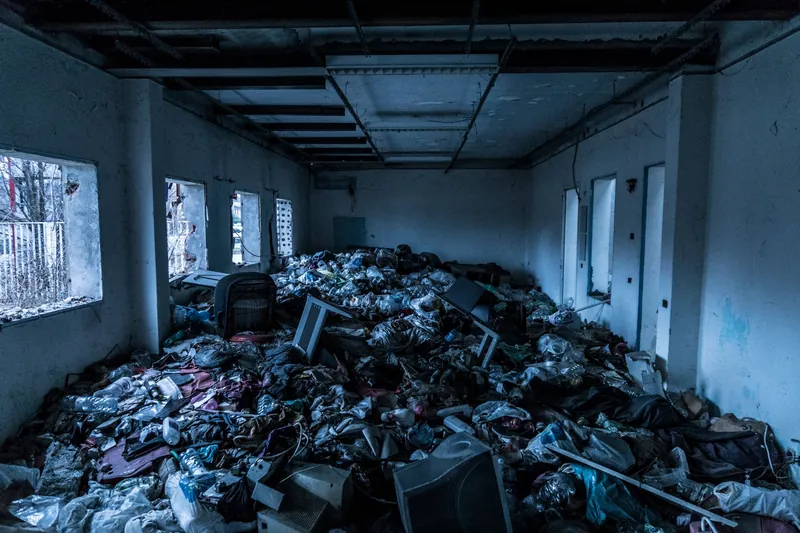
Hoarding Cleanup
Respectful sorting, item removal and deep cleaning are included in hoarding cleanup.
See hoarding cleanupClear built-up waste, remove contaminated materials and deep clean an unsafe home with a plan that protects important belongings and explains each stage.
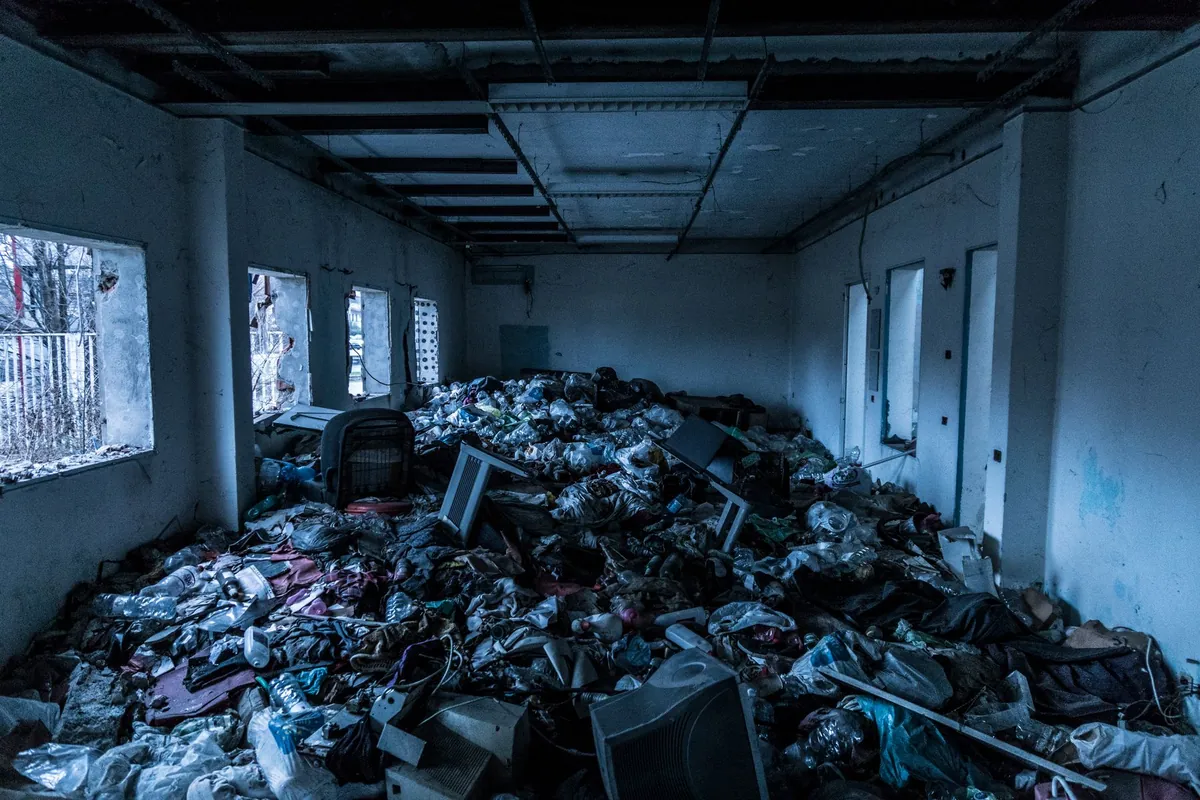
Filth and squalor cleanup removes accumulated trash, spoiled material and unsafe waste, then cleans and disinfects affected areas so the home can be used more safely.
The word squalor refers to a property's condition, rather than the person who lives in it. Illness, grief, limited mobility, plumbing trouble, pests or an extended lapse in routine cleaning can lead to decline. Cleanup should address what is present and identify useful next steps without placing blame.
Work can involve opening safe paths across floors, separating personal belongings, taking out household trash and discarded food, cleaning bathrooms and kitchens, and addressing stubborn odor. Discovery of blood, urine, feces, loose sharps, sewage or another contaminated material changes the approach. Biohazard remediation, protective gear, controlled zones and proper waste disposal may then be necessary.
A full property cleanout and filth cleaning are not always identical. Severe sanitation concerns can exist even when only a small number of possessions are wanted. Some spaces must be sorted with care to make any surface accessible. The right cleaning service should base the scope on the affected area, the materials left behind and the decisions you want to make about personal items.
The plan uses separate entries for repairs, odor treatment, disinfection, content removal and deep cleaning to show what the cleanup involves.
Workers should select containment and protective gear according to hazards present and use suitable waste disposal for spoiled material, pest activity, bodily fluids and loose sharps. Each cleanup step should be explained in the plan.
Clear, blame-free explanations guide you through the cleanup. Documentation covers individual rooms, and your objectives guide decisions about sanitary conditions and safety.
Workers use unmarked vehicles when arriving. Loading and work zones can be arranged to limit unnecessary attention around the home.
Filth cleanup may be appropriate when affected spaces cannot be reached or restored safely through normal housekeeping. Common examples include:
Spoiled food, grease, leaking bags and pest activity have made counters, appliances or the floor difficult to reach and use.
A health emergency, hospitalization or mobility limits can leave more food waste, trash and bathroom residue than you can address safely alone.
Abandoned waste may need removal and impacted rooms may need documentation for a tenant, owner or authorized manager ahead of repairs or reoccupancy.
Protective gear, targeted disinfection and removal may be necessary when fixtures and surrounding areas contain feces, urine or heavy residue.
First, keep people safe and leave room for thoughtful decisions about the property. Avoid shifting waste until you understand the possible hazards. Do not start cleanup during an active medical crisis, fire or other immediate safety danger. Contact the correct emergency service or law enforcement first.
Call (888) 440-9227Published guides list $3,000 to $20,000 for hoarding conditions with biohazards and $2,000 to $25,000 for hoarding at a biohazard level. Yelp lists an average range of $400 to $1,500 for human waste cleanup. These are related planning ranges because squalor jobs vary widely. The amount of buildup, waste type, damaged materials, pests and odor treatment determine the actual scope.
Published national cost guides are the source for these ranges, rather than an inspection of your property. The price for your property is set after the on-site assessment, and you hear it before work starts.
Ask about cost: (888) 440-9227Insurance may pay for damage connected to an event your policy covers. It often treats general cleaning, built-up waste and ongoing neglect differently. Your insurance company uses the policy along with the documented damage cause when deciding coverage.
Ask what cause of loss applies, what photos and records are required, which affected areas are included, and whether removal, sanitation and restoration are considered separate parts of the claim. Insurance assistance may include organizing these records for your adjuster.
Check with the insurance company about whether a covered plumbing loss or another sudden event caused some damage. Cleanup not caused by the incident may be assessed on its own.
An executor or another authorized representative should determine payment authority, scope approval and removal permission before anyone moves personal property.
The lease, property condition and local requirements can affect who arranges access and payment. Do not discard a tenant's possessions until an authorized person approves what will happen.
Remediation is adapted to the situation while keeping a careful order. It begins with safety and sorting, then moves through removal and detailed cleaning before a final walkthrough. That flow separates dirty contents from areas that have already been cleaned.
Cleanup technicians assess the rooms they can enter and record affected areas, waste, pests, dampness, sharp objects, blocked routes and materials that may have to be removed.
Workers set boundaries for the cleanup and preserve a clean exit route. Protective clothing, gloves, eye protection and respiratory equipment are matched to the risks identified.
Documents, medication, photographs, valuables and uncertain belongings are separated from waste so you or an authorized person can decide what happens to them.
Approved discards, garbage and spoiled items are placed in bags or other containers. Dirty bags are kept out of clean spaces, and workers do not combine sharps with regular garbage.
When liquids or waste soak beyond effective cleaning, removal may include carpet, padding, cabinets, drywall or subfloor.
Exposed hard materials are cleaned before disinfection begins. Where disinfection is needed, an EPA-registered product is kept wet for the full contact time stated on its label.
Eliminate the smell's source before other treatment. Remaining odors and airborne particles may be reduced through air scrubbing, HEPA vacuuming and treatment of specific surfaces.
Your final inspection covers cleared rooms, kept belongings, removed materials and remaining restoration services such as pest control, drying, plumbing or construction. An explanation of any remaining work helps you move forward.
You can call anytime. You speak with a filth and squalor cleanup specialist who outlines the process and schedules a start time with you.
Serious health risks may remain within a severe buildup that contains waste, moisture, unstable contents or sharp objects, despite a surface that seems dry.
Needles, broken glass, medication and leaking household chemicals can be hidden inside bags or under loose items. These hazardous materials need separation and a waste path suited to the material.
Rodents or insects may be drawn to uncovered trash and food spoilage. Look for nests, droppings and pest damage ahead of any pile movement or disturbance of dry debris.
Wall materials, timber, carpet and grout can absorb urine or feces. Porous materials may hold contamination and odor after the visible surface has been wiped.
Can you clean it yourself? You may clean a limited patch of normal dirt on a sound, non-porous surface by wearing gloves and following label directions. Do not continue around an unknown chemical, unstable stacks, sewage, animal waste or human waste, loose sharps, or porous surfaces that absorbed contamination.
A small affected area may take about a day, while several rooms can take multiple days. Whole-home squalor can take a week or longer when access is limited, belongings need decisions or contaminated materials must be removed.
| Scene | Typical time on site |
|---|---|
| Limited accumulation within one accessible space | Often about one day |
| Several rooms requiring removal and deep cleaning | Often several days |
| An entire residence containing substantial waste or damaged materials | The work may last one week or more |
Lasting odor control begins by dealing with its source instead of covering it with scent. Trash, spoiled food, feces, urine, wastewater, pest residue and damp carpeting produce different smells. Before treating the air, damaged contents, bags and absorbent items need cleaning or removal.
After source removal, exposed surfaces are cleaned and disinfected where needed. HEPA vacuuming and air scrubbers can reduce airborne particles. Odor in carpet pad, cabinets, wall cavities or subfloor may point to contamination that is still left behind. Those materials need inspection before the room is closed or repairs begin.
For jobs where workers could encounter blood or material that may be infectious, the OSHA Bloodborne Pathogens Standard, 29 CFR 1910.1030, requires training, protective equipment and exposure controls.
An EPA-registered disinfectant must be used according to its label. The surface needs to stay wet for the stated contact time so the product can work as directed.
Massachusetts calls this medical or biological waste, and it includes materials saturated with blood. Department of Public Health rules control its storage, treatment, disposal and transportation, so it must be treated first and cannot go in household trash.
Local health and building rules can affect how a contaminated room is cleaned and when it can be used again, so mention any notice you have received from the city or county.
The full filth and squalor cleanup guide covers what is cleaned or removed, odor and air quality work, and the rules that apply in Suffolk County.
Read the full filth and squalor cleanup guide
Local population patterns, housing and site access may affect how containment and cleanup are planned.
If direct exposure occurs, the closest listed emergency option is Tufts Medical Center, about 4.9 miles away, not the cleanup site.
The surrounding area includes Spectacle Island, Gallops Island, and Lovells Island, so cleanup travel may cross several local streets or municipal boundaries.
Properties within this Boston neighborhood may share alleys, entries, or parking, so equipment movement should be planned around nearby residents.
During your call, ask whether cleanup is available in surrounding communities and ZIP codes.
Respectful sorting, item removal and deep cleaning are included in hoarding cleanup.
See hoarding cleanup
Hoarder house cleanout covers every room from start to finish and includes trash removal.
See hoarder house cleanout
Animal hoarding cleanup addresses waste, urine-soaked materials and odors caused by ammonia.
See animal hoarding cleanup
Rentals, residences and public bathrooms receive human feces cleanup and disinfection.
See human feces cleanup
Floors, underlying subfloors and furniture receive urine cleanup with odor removal.
See urine cleanup
Cleanup removes infectious material, including blood and body fluids, and disinfects the property.
See biohazard cleanup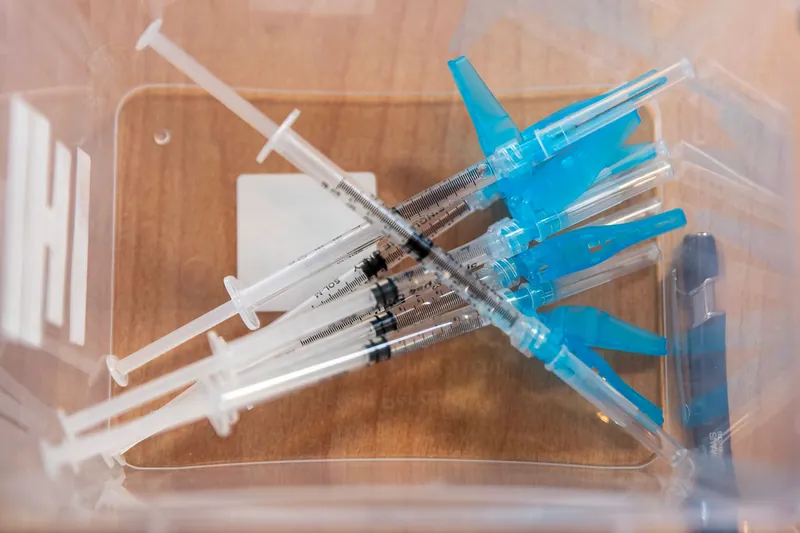
Yards, encampments, parks and rental properties receive needle and sharps cleanup.
See needle and sharps cleanup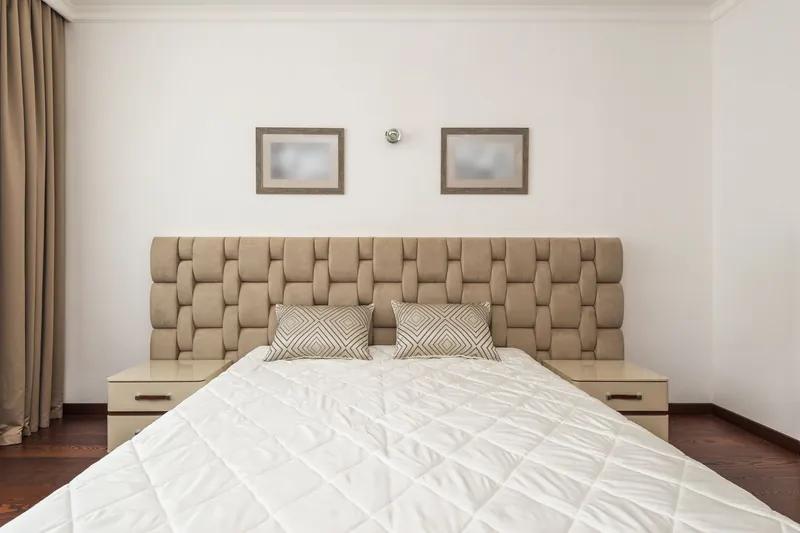
Biohazard cleanup addresses Airbnb accommodations, hotels and other rental units.
See hotel, airbnb and rental biohazard cleanupSqualor describes an unsanitary property condition. Someone with hoarding behavior struggles to discard belongings, whether or not heavy filth is present. Some homes are clean despite crowding, while others hold few furnishings yet remain unsafe from residue and waste. The cleaning scope should be based on the conditions present, not a label.
For human waste cleanup, related cost guides show $400 to $1,500; for hoarding involving biohazards, $3,000 to $20,000; and for biohazard-level hoarding, $2,000 to $25,000 in the guides. Use these figures for planning. Factors shaping your scope include how much buildup exists, the kind of waste, damaged materials, pests, entry challenges and smell removal.
Cleaning may require about a day for one reachable room with modest accumulation. Expect several days for multiple rooms and possibly a week or longer when conditions extend heavily throughout the home. Sorting decisions, blocked access, pests, contaminated porous materials, odor sources, plumbing problems and repair needs can extend the cleaning process.
Finding the odor's source must come before deep cleaning can be effective. Before other treatment, workers may need to take out damp contents, waste, spoiled food, pest debris and carpet soaked with urine. Hard surfaces are then cleaned, and air quality work can follow. Persistent odor can indicate contamination within cabinetry, wall voids, carpet padding or the subfloor.
Insurance coverage varies with the loss cause and the specific policy. General cleaning or long-term accumulation may be treated differently from damage caused by a covered sudden event. Ask the insurance company which cause applies, what records are required and whether repairs, sanitation and removal are evaluated separately.
Filth and squalor cleanup removes built-up garbage before thoroughly cleaning a residence affected by unsafe sanitation. It can include sorting personal property, removing spoiled material, cleaning hard surfaces, disinfecting affected areas, treating odor and removing porous materials that cannot be safely cleaned.
You can request respectful, discreet filth and squalor cleanup 24 hours a day, and crews use unmarked vehicles.